Understanding Shopping Cart Colored Icons: Why Clean Vector Graphics Matter in Modern Design
In the world of digital design, few symbols are as universally recognized as the shopping cart icon. Whether you're browsing an online store, using a mobile shopping app, or flipping through a printed catalog, that small cart graphic signals one thing clearly: it's time to make a purchase. But not all shopping cart icons are created equal. The difference between a confusing, pixelated image and a crisp, colorful vector icon can shape how users perceive your brand, how they interact with your content, and whether they complete a transaction. This article explores the purpose, significance, and practical relevance of shopping cart colored icons, especially those built on a simple and clean design philosophy. We'll look at how these versatile graphics fit into websites, mobile apps, social media, infographics, flyers, print materials, banners, posters, and many more applications. Along the way, we'll clarify common misunderstandings and help you build a broader understanding of why vector-based icon sets are essential tools for designers, marketers, and business owners alike.
What Are Shopping Cart Colored Icons?
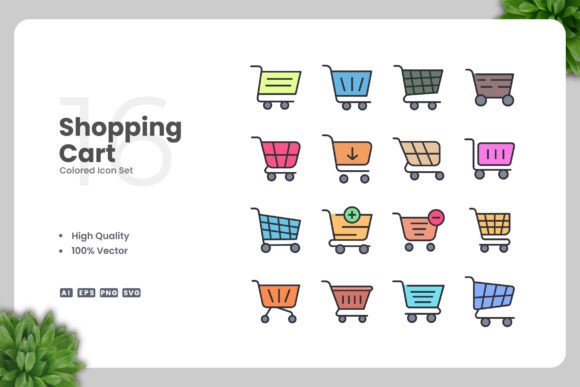
At their core, shopping cart colored icons are visual symbols representing an e-commerce shopping cart, often rendered in one or more colors to add visual appeal and brand alignment. Unlike plain black-and-white outlines, colored icons bring energy, clarity, and emotional resonance to a design. A well-crafted cart icon might use a bright orange or blue to draw attention, or it might incorporate subtle gradients that suggest quality and modernity. These icons are typically created as vectors—mathematical shapes that can be scaled infinitely without losing quality. That means the same icon file can appear on a massive billboard and a tiny mobile button with equal sharpness. When you download a set like the one described by Upnowgraphic, you receive files in formats such as AI (Adobe Illustrator), EPS (Encapsulated PostScript), SVG (Scalable Vector Graphics), and PNG with transparency. This variety ensures that you can use the icons in virtually any digital or print environment, from web pages to brochures.
Why Simple and Clean Design Matters
In an age of information overload, simplicity is a superpower. A simple and clean design removes unnecessary clutter, allowing the user to focus on the action you want them to take. For a shopping cart icon, that means a recognizable silhouette without distracting details. A clean cart icon typically features clear lines, balanced proportions, and a minimal number of elements—often just the cart body, wheels, and a handle. When you add color thoughtfully, you enhance recognition without sacrificing clarity. The combination of simplicity and color makes the icon accessible to a wide audience, including people who may be visually impaired or using a device with a small screen. Moreover, clean icons load faster, scale better, and integrate more smoothly into responsive layouts. Whether you're designing a mobile app interface or a printed flyer, a straightforward cart icon communicates professionalism and trustworthiness.
Scalability Without Compromise
One of the most significant advantages of vector icons is their infinite scalability. Because vectors are based on mathematical formulas rather than pixels, you can resize a single icon from 16 pixels to 16 feet without any loss of quality. This is critical for modern multi-platform design, where the same icon might appear on a smartwatch, a smartphone, a tablet, a laptop, a TV screen, and a printed poster. With a 100 vector set like the one offered by Upnowgraphic, you have a library of icons that remain crisp at every size.
Customizability for Brand Alignment
Another key benefit is customizability. Since vector files can be edited in software such as Adobe Illustrator or CorelDRAW, you can easily change colors, adjust sizes, modify shapes, or combine elements. This means you can match the icon to your brand's color palette, ensuring consistency across all touchpoints. For example, if your brand uses a specific shade of teal, you can open the AI or EPS file and update the cart icon to that exact hue in seconds. The same goes for adding shadows, highlights, or other effects.
File Versatility
A robust icon set includes multiple file formats to accommodate different workflows. The set described includes source file AI, EPS version 10, SVG file, and PNG transparency. Each format serves a purpose: AI and EPS are editable vector formats ideal for professional designers; SVG is a web-friendly vector format that works directly in browsers; and PNG with transparency allows easy placement over colored backgrounds without a white box. A Readme.txt file is also included to guide you through installation and usage, which is especially helpful for beginners.
Practical Applications Across Media
The versatility of shopping cart colored icons means they can be used in a wide range of contexts. Let's explore how they fit into modern life, work, business, education, creativity, technology, and daily activities.
Websites and Mobile Apps
In e-commerce, the shopping cart icon is arguably the most important navigation element. It tells users where to find their selected items and proceed to checkout. A colored, clean icon stands out against a navigation bar or header, reducing the cognitive load on shoppers. For mobile apps, where screen space is limited, a simple cart icon with a color accent can be more legible than a text link. Additionally, using an SVG file ensures the icon renders perfectly on retina displays and high-DPI screens.
Social Media and Infographics
Social media posts often rely on visual cues to convey information quickly. A shopping cart icon can be used in a post announcing a sale, a new product launch, or a customer testimonial. In infographics, cart icons can represent data points such as "average cart value" or "conversion rate." Because the icons are colored and clean, they add visual interest without distracting from the data. You can resize and recolor them to fit the infographic's theme.
Flyers, Print, Banners, and Posters
Print materials demand high-resolution graphics. Since vector icons are resolution-independent, they print beautifully at any size. A flyer for a retail store might use a large cart icon to draw attention to a discount offer. A banner at a trade show could feature a series of cart icons to illustrate a step-by-step purchasing process. Posters for online shopping events can incorporate cart icons as decorative elements. The EPS version 10 format is widely supported by professional print shops, making it easy to hand off your design files.
Books and Educational Materials
Even textbooks and instructional guides can benefit from shopping cart icons. For example, a chapter on e-commerce fundamentals might use cart icons to label different parts of a checkout flow. In educational settings, clean icons help learners focus on the concept rather than deciphering a confusing graphic. Because the icons are available in multiple colors, you can use color-coding to differentiate between related ideas—such as "add to cart," "view cart," and "checkout."
Examples of Effective Use
Imagine you are designing a mobile app for a boutique clothing store. You download a set of shopping cart colored icons and choose a version with a soft pastel blue fill to match your brand's aesthetic. You place the icon in the top-right corner of the app's main screen, and because it's an SVG, it scales perfectly across different phone sizes. When users tap the icon, they are taken to a cart page where the same icon appears in a larger size as part of the header. The consistency builds trust.
Now consider a printed flyer for a grocery delivery service. You use a bright green cart icon on the front of the flyer, next to the headline "Fresh Groceries, Delivered." The icon is clean enough to be recognizable even when printed at a small size. Inside the flyer, you use a smaller version of the same icon next to each product category. Because the icon file is a vector, you can easily adjust its color to match the category—for example, a red cart for meats and a blue cart for seafood.
In an infographic about online shopping trends, you could use a series of cart icons in different colors to represent different metrics. A yellow cart might indicate "average order value," while a purple cart shows "monthly active users." The ability to change colors in vector software makes this kind of data visualization simple and effective.
Myth: Vector Icons Are Hard to Use
Many newcomers assume that vector files require advanced technical skills. In reality, modern software like Adobe Illustrator and CorelDRAW have user-friendly interfaces. Opening an AI or EPS file and changing a color is as simple as selecting the object and picking a new swatch. If you don't have design software, you can still use the PNG files directly in tools like Canva, Microsoft Word, or PowerPoint. The included Readme.txt file often provides step-by-step guidance.
Myth: Colored Icons Are Less Professional Than Monochrome
Some designers worry that adding color makes an icon look childish or unprofessional. In reality, color—when used thoughtfully—can enhance professionalism by reinforcing brand identity and improving accessibility. A muted navy or charcoal cart icon can look just as elegant as a black outline, while a bright accent color can guide the user's eye to the most important action. The key is to choose colors that align with your overall design system.
Myth: One Icon Fits All Contexts
While a single cart icon can be versatile, you may need variations for different contexts. That's why a set with 100 vector icons is valuable. You can select the perfect style for each use—a minimalist outline for a clean website, a filled icon for a button, or a detailed illustration for a hero banner. Having options prevents design fatigue and keeps your visuals fresh.
How to Get Started with Shopping Cart Colored Icons
If you're ready to incorporate these icons into your projects, the first step is to download a reliable set from a trusted source like Upnowgraphic. Look for a set that includes multiple file formats (AI, EPS, SVG, and PNG), a clear license, and a Readme file. Once you have the files, open them in your preferred vector software. Experiment with resizing, recoloring, and combining icons. If you're using the icons for a website, export them as SVG or PNG. For print, export as high-resolution EPS or PDF. Remember to test the icons at different sizes to ensure they remain legible and visually appealing.
Conclusion
Shopping cart colored icons with a simple and clean design are far more than decorative elements—they are essential tools for communication, branding, and user experience. Their vector nature guarantees scalability and customizability, making them suitable for websites, mobile apps, social media, infographics, flyers, print, banners, posters, and beyond. By choosing a high-quality set like the one offered by Upnowgraphic, you gain access to 100 vector icons that are 100 customizable, easy to drag and drop, and available in multiple formats including AI, EPS 10, SVG, and PNG transparency. Whether you are a seasoned designer or a small business owner creating your own marketing materials, these icons empower you to create consistent, professional, and engaging visuals. As you plan your next project, consider the role that a clean, colored shopping cart icon can play in guiding your audience toward action—and remember that the right icon set can make all the difference.
Thanks and have a great day. Upnowgraphic.