Why Tool Box Colored Icons Elevate Digital and Print Projects
In today's fast-paced design landscape, the visual elements you choose can make or break a project. Whether you are building a website, designing a mobile app, or preparing a marketing campaign, the icons you use carry significant weight. Among the many options available, Tool Box Colored Icons stand out as a versatile and practical choice. Their simple and clean design ensures they blend seamlessly into various contexts while still adding a professional touch. But what exactly makes them so valuable, and how can you leverage them effectively?
This article explores the core qualities of Tool Box Colored Icons, their practical applications across industries, and why they are a smart investment for creatives and businesses alike. We will dive into the technical features, customization potential, and real-world scenarios where these icons shine.
The Core Appeal of Simple and Clean Icon Design
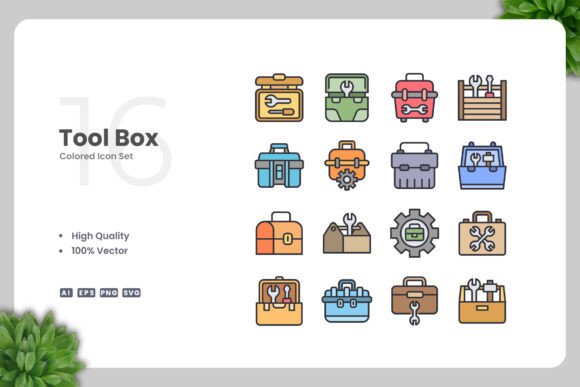
Minimalism in design is not merely a trend; it is a functional approach that prioritizes clarity and usability. Tool Box Colored Icons embody this philosophy by stripping away unnecessary detail while retaining enough visual character to communicate meaning instantly. When you look at a well-crafted toolbox icon, you do not need to study it—you immediately understand its association with tools, repair, construction, or organization.
This simplicity translates directly to better user experiences. In a mobile app, for instance, clean icons reduce cognitive load, helping users navigate interfaces faster. On a website, they draw attention without overwhelming the layout. The colored aspect adds another layer: color coding can convey status, category, or priority. A red toolbox might indicate urgent maintenance, while a green one suggests available resources. This subtle visual language is powerful.
Moreover, clean design ensures longevity. Unlike overly detailed or trendy graphics that age quickly, Tool Box Colored Icons remain relevant across years and design trends. They adapt to various branding schemes, color palettes, and aesthetic preferences without clashing.
Versatility Across Platforms and Media
One of the most compelling reasons to choose Tool Box Colored Icons is their adaptability. These icons are not limited to one type of project. They work equally well in digital environments and print materials, making them a true multi-purpose asset.
- Websites and Mobile Apps: Icons serve as visual anchors for navigation, buttons, and feature highlights. A toolbox icon can represent a services page, a settings menu, or a resource library. The clean design ensures readability on small screens, while the color adds emphasis.
- Social Media Graphics: Posting about maintenance tips, DIY projects, or organizational tools? A toolbox icon instantly signals the topic to your audience. It works in headers, infographic elements, or as a watermark.
- Infographics and Flyers: Print materials benefit from icons that break up text and guide the reader's eye. Tool Box Colored Icons can illustrate steps in a process, highlight key data points, or simply add visual interest to a layout.
- Banners and Posters: Large format requires designs that scale without losing quality. Vector-based icons are perfect for this, and the clean aesthetic ensures the message remains clear even from a distance.
- Books and eBooks: Educational or instructional content often uses icons to denote chapters, tools needed, or safety warnings. The colored icons add a modern feel to otherwise text-heavy pages.
In every scenario, the consistent quality of these icons reinforces a professional image. Whether your audience views them on a retina display or a printed brochure, the result is crisp and polished.
Technical Flexibility: Customization and File Formats
Beyond aesthetics, the true strength of Tool Box Colored Icons lies in their technical foundation. They are built for customization, which is essential for designers who need to match specific brand guidelines or creative visions.
Resizing and Color Changes Made Simple
Because these icons are vector-based, you can resize them infinitely without losing sharpness. Need a tiny icon for a mobile button? No problem. Want to blow it up for a poster? The edges remain clean and the colors stay vibrant. This scalability is a massive advantage over raster images, which become pixelated when enlarged.
Changing colors is equally straightforward. With vector editing software like Adobe Illustrator or CorelDRAW, you can adjust the hue, saturation, or brightness of any element within seconds. This allows you to:
- Match your brand's exact color palette.
- Create light and dark mode variations for apps.
- Generate monochromatic versions for print.
- Experiment with gradients or transparency effects.
For example, if your brand uses a specific shade of teal and orange, you can apply those colors to the toolbox icon, ensuring consistency across all touchpoints. This level of control is invaluable for maintaining brand identity.
File Inclusions: What You Get and Why It Matters
A professional icon set should provide multiple file formats to accommodate different workflows. The Tool Box Colored Icons set typically includes:
- Source File (Ai): The native Adobe Illustrator file gives you full access to layers, paths, and effects. You can modify every aspect of the icon, from the shape of the handle to the color of the body.
- EPS Version 10: This is a widely compatible vector format that opens in most vector editing programs, including CorelDRAW and Affinity Designer. It preserves all the scalability and editability of the Ai file.
- SVG File: Scalable Vector Graphics are ideal for web use. They load quickly, scale perfectly on any screen, and can be animated or styled with CSS. SVG is the gold standard for modern web development.
- PNG Transparency: For situations where you need a ready-to-use image without editing software, PNG files with transparent backgrounds are provided. You can drop them directly into slideshows, social media templates, or print layouts.
- Readme.txt: This simple file contains important information about the set, including usage terms, software recommendations, and contact details for support.
Having all these formats ensures that no matter your skill level or software preference, you can use the icons immediately. It also future-proofs your work, as you can always go back to the source files for updates.
Practical Benefits for Modern Workflows
Designers, developers, and content creators often work under tight deadlines. Efficiency is not a luxury—it is a necessity. Tool Box Colored Icons support modern workflows by being intuitive to use and easy to integrate.
Easy Drag and Drop Functionality
One of the most appreciated features is the drag-and-drop simplicity. Once you download the files, you can open them in your preferred software and directly drag the icons into your project. There is no complex importing process, no messy file conversions. This speed allows you to focus on composition and creativity rather than technical hurdles.
For example, if you are designing a dashboard in Adobe XD or Figma, you can import the SVG files and adjust them on the fly. In print design with Illustrator, you can drag the EPS files into your artboard and start scaling immediately. This frictionless experience is exactly what busy professionals need.
100% Vector and 100% Customizable
The promise of "100 Vector" means that every line, curve, and color fill is mathematically defined. There are no embedded raster elements that could degrade. Combined with "100 Customizable," this guarantees that you are not stuck with a one-size-fits-all graphic. You can:
- Rotate, flip, or skew the icon.
- Combine it with other elements.
- Break it apart and use individual pieces.
- Add shadows, outlines, or glows.
This flexibility encourages experimentation. You might start with a standard toolbox icon and end up creating a unique symbol for your brand's maintenance service. The possibilities are limited only by your imagination.
Real-World Scenarios and Recommendations
Let us look at a few concrete examples where Tool Box Colored Icons can make a tangible difference.
Scenario 1: A Home Services Mobile App
Imagine you are designing an app for a handyman service. The home screen features categories: plumbing, electrical, painting, and general repairs. Using Tool Box Colored Icons for each category provides instant visual recognition. A blue toolbox for repairs, a yellow one for electrical work, and a green one for painting. Users can quickly tap what they need, and the clean design ensures the icons remain legible on smaller phone screens. The ability to recolor the icons to match the app's UI theme is a bonus.
Scenario 2: A DIY Blog and Social Media Campaign
A blogger focusing on home improvement uses the icons in their featured images, Pinterest pins, and Instagram stories. The toolbox icon appears in the corner of each graphic as a branding element. For a series on essential tools, the icon is resized and recolored to differentiate posts. The PNG files are especially useful for quick uploads to social platforms without extra editing steps.
Scenario 3: A Corporate Presentation on Resource Management
An operations manager prepares a quarterly review for stakeholders. Slides about tool inventory, equipment maintenance, and team resources incorporate the icons. The clean style adds a professional, modern look to the presentation, while the consistent vector quality ensures the icons remain sharp on a projector screen. The ability to change colors allows the manager to align icons with the company's presentation template.
What to Consider Before Choosing Tool Box Colored Icons
While the benefits are clear, you should also consider a few practical aspects to ensure these icons are the right fit for your project.
- Consistency with Your Brand: While the icons are customizable, ensure that their clean and simple aesthetic complements your existing brand identity. A highly ornate or vintage brand might find them too minimal, while a modern or tech-focused brand will see them as an ideal match.
- File Compatibility: Confirm that your design software supports the provided formats. Ai and EPS are standard for vector editing, but if you primarily use web-based tools, SVG is the most accessible. If you work exclusively with raster editors like Photoshop, the PNG files are ready to use, though you lose vector editing benefits.
- Licensing and Usage Rights: Always review the readme.txt file or accompanying documentation to understand how you may use the icons. Some sets are royalty-free for commercial use, while others may have restrictions. Clear licensing avoids legal headaches down the line.
- Size of the Set: A single toolbox icon is useful, but a set with multiple variations (different angles, styles, or color schemes) offers more flexibility. Consider whether you need one icon or a family of related symbols.
Final Thoughts on Tool Box Colored Icons
In a world where visual communication is paramount, having reliable, high-quality design assets is essential. Tool Box Colored Icons deliver on every front: they are simple yet expressive, clean yet colorful, and technical yet accessible. Their vector foundation ensures they work flawlessly across print, digital, and mobile platforms, while the included file formats cater to diverse workflows.
Whether you are a seasoned designer building a complex interface or a small business owner creating your own marketing materials, these icons offer a balance of quality and ease of use that is hard to beat. By investing in a set that is fully customizable and professionally crafted, you save time, maintain consistency, and elevate the overall visual appeal of your projects.
Upnowgraphic has designed this set with the modern creator in mind—high quality, simple to implement, and built to last. With Tool Box Colored Icons in your toolkit, you are ready to tackle any project with confidence.